
The University of Cádiz takes part in the final meeting of the European 3L4MOHS project on lifelong learning and occupational health and safety in Mongolia 28 July 2026
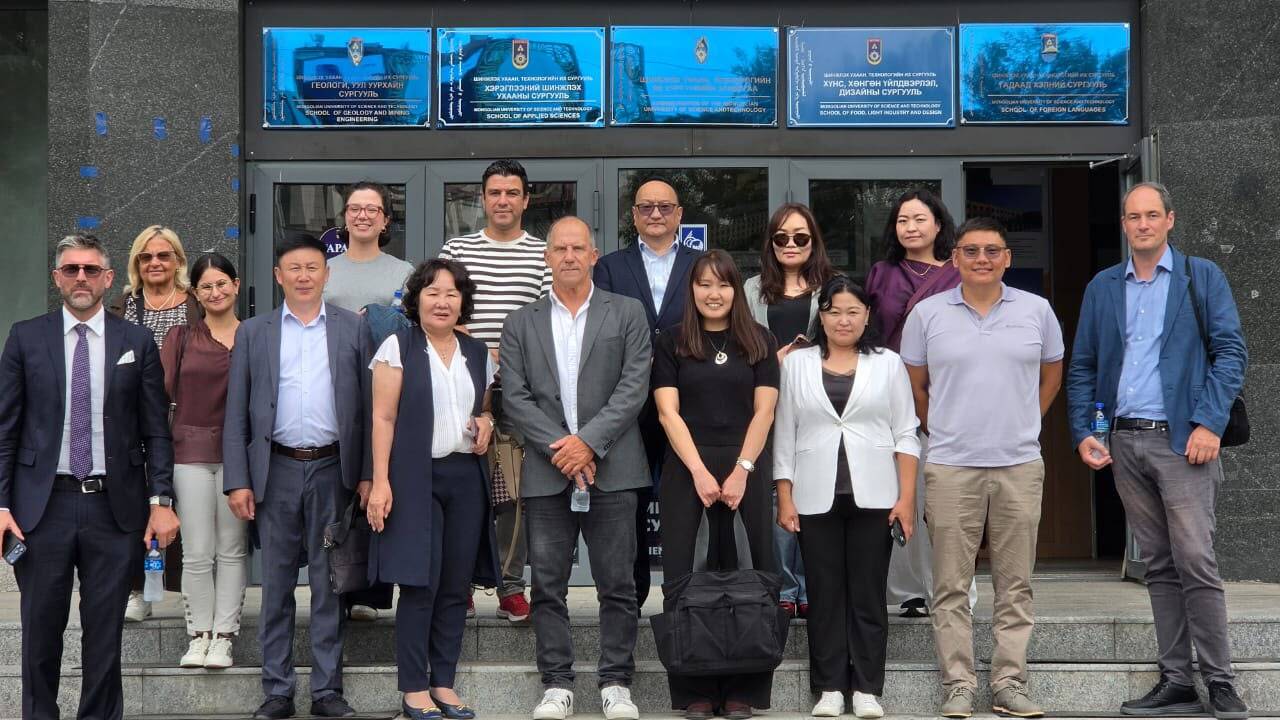
Professor David Jiménez Pavón, from the Department of Physical Education and Sport, and coordinator of the 3L4MOHS project – Lifelong Learning for Mongolia: Occupational Health and Safety – on behalf of the University of Cádiz, took part in the project’s final event and transnational coordination meeting, held in Ulaanbaatar, Mongolia, on 28 and 29 July 2026.
3L4MOHS is a Capacity Building in Higher Education project, funded by the European Union’s Erasmus+ programme. The consortium comprises four Mongolian higher education institutions: the Mongolian University of Science and Technology (MUST) and the National University of Mongolia (NUM), both based in Ulaanbaatar, together with the Polytechnical College of Khentii Province and the Umnugovi Province Polytechnic College, which operate in regions far from the capital and help extend the project’s territorial reach.
The participating European institutions are the University of Patras, in Greece, which coordinates the project; the Università degli Studi di Palermo, in Italy; and the University of Cádiz.
The University of Cádiz’s involvement is led by the research group MOVE-IT CTS-1038, Empowering Health by Physical Activity, Exercise and Nutrition, made up on this project by Professors Ana Carbonell Baeza and Vanesa España Romero, together with David Jiménez Pavón, project lead at the UCA and director of the aforementioned group.
The main aim of 3L4MOHS has been to help create and consolidate Lifelong Learning Centres (LLCs) at four Mongolian higher education institutions, as well as to modernise and digitalise training programmes related to occupational health and safety. To this end, the consortium has worked jointly on developing educational content, digital tools and innovative teaching methods, incorporating resources such as gamification, artificial intelligence and other pedagogical approaches aimed at improving the accessibility, quality and practical applicability of the training.
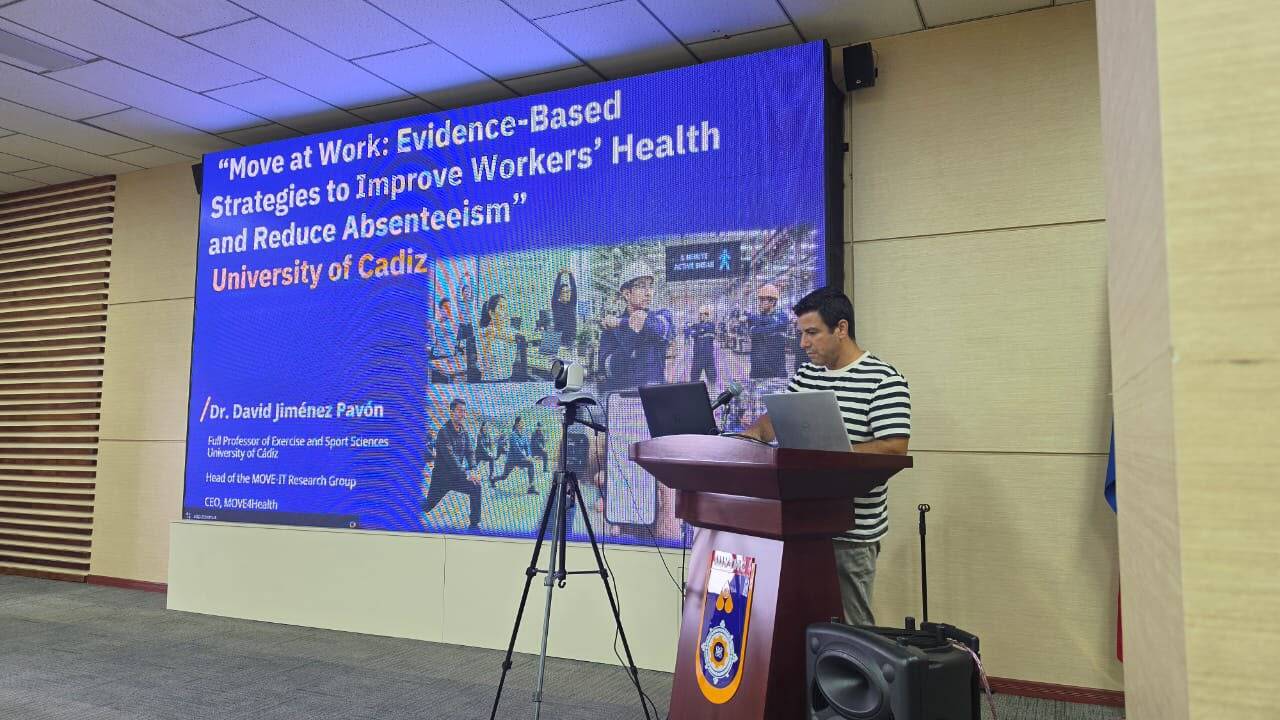
The final event, held on 28 July, provided an opportunity to present the project’s main results and share the experiences developed by the participating institutions. The day covered the modernisation of occupational health and safety training, the application of digital technologies, artificial intelligence and gamification, as well as the impact and future sustainability of the Lifelong Learning Centres created in Mongolia. The University of Cádiz also presented its contribution to the project through the MOVE-IT group.
The programme also included presentations on the main occupational health and safety challenges in different regions and productive sectors in Mongolia, together with student presentations on artificial intelligence applied to risk prevention, protective equipment, human factors and environmental conditions in industrial settings.
During the transnational meeting on 28 and 29 July, the partners reviewed progress on the different work packages, shared the advances made, and set out the remaining tasks, final agreements and actions needed to ensure the continuity and effective use of the project’s results.